

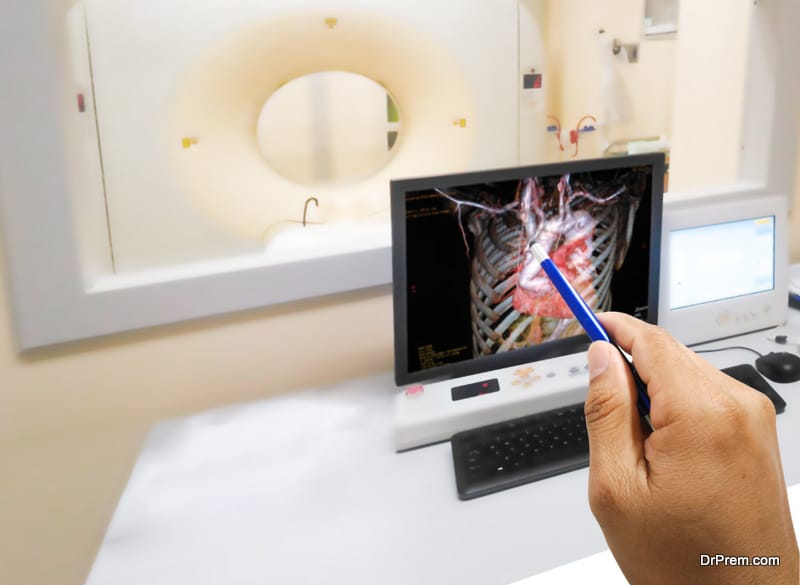

Definition:
Coronary angiography is performed to diagnose blocked arteries of the heart and coronary artery disease (heart disease). A special dye and X-ray are used to check the blood flow through the heart of a patient. It is often performed with cardiac catheterization (medical procedure used to diagnose and treat certain heart conditions).
Preparation for the procedure:
- Patient can be admitted into hospital a night before the procedure.
- Patient should not eat or drink anything 8 hours prior to the procedure.
- Inform the physician about any drug allergies.
During the procedure:
- Patient will be asked to wear a hospital gown and mild sedatives may be administered to ensure relaxation and comfort. Electrodes will be placed on the patient’s body to monitor heart rate during the procedure.
- The physician will insert a catheter in the groin or upper thigh, with the guided assistance of a fluoroscope (a special X-ray viewing instrument); this is then advanced up to the opening or the coronary arteries (heart blood vessels).
- The dye is injected through the catheter into the coronary artery and several images (X-rays) known as angiograms, are taken. The whole procedure may take approximately 30 to 60 minutes.
- Patient usually stays awake during the procedure, and may feel some pressure when the catheter is inserted.
- The catheter is removed once the procedure is complete and the insertion site (hole) will be sealed (sutured) or compressed to prevent bleeding.
- Patient will be transferred to the recovery room and monitored for 2-8 hours. Patient needs to lie flat on their back in bed, for a few hours after the test to avoid bleeding.
Risks and Complications:

The procedure is relatively safe when performed by an experienced physician. However, some risks and complications associated with this procedure include:
- Irregular heartbeat
- Arterial damage
- Low blood pressure
- Compression of the heart
- Allergic reaction to dye
- Haemorrhage
- Heart attack/stroke
- Infection
- Kidney damage
Uses of the procedure:
Coronary angiogram is used for the following:
- To find the blockage in the coronary arteries and diagnose specific coronary artery diseases such as unstable angina, atypical chest pain, aortic stenosis, or unexplained heart failure.
- To open the blockage found during the procedure through percutaneous coronary intervention or PCI.
- To assist the physician in diagnosing and recommending treatment for appropriate coronary artery diseases.
Travelers guide:
- Patients undergoing a coronary angiogram can return home 24 hours post procedure.
- Coronary angiogram is a relatively safe procedure and the patient can return home immediately after the procedure. However, it is always advisable to stay at the hospital 48 hours post procedure.